

Surjeet Thakur
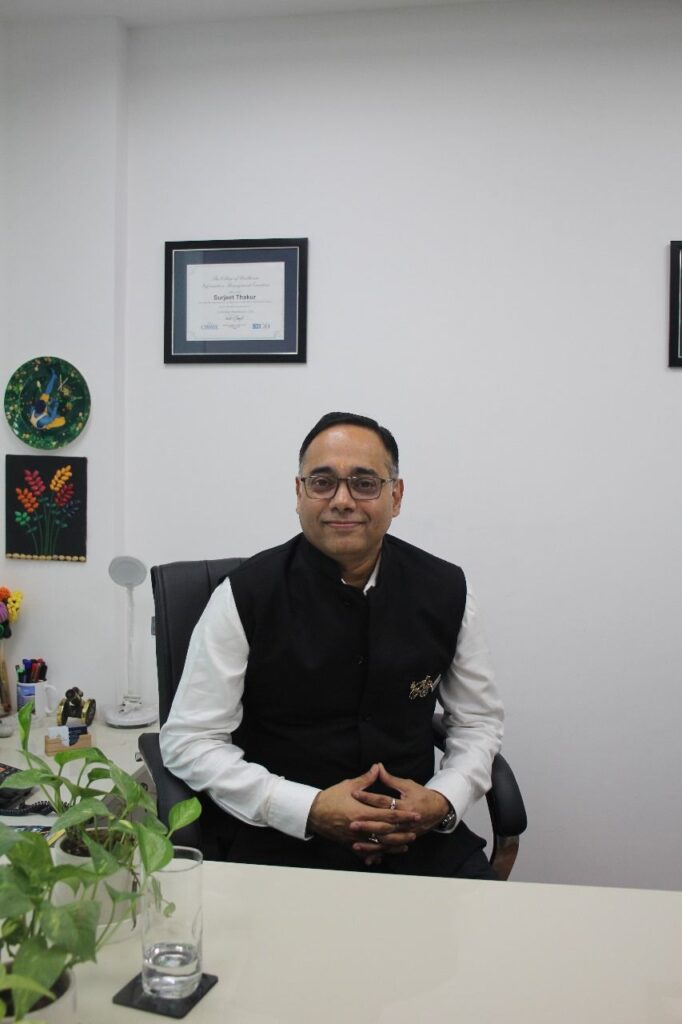
In a recent episode of InnoHealth Magazine Podcast, Soumya Singh spoke with Surjeet Thakur, founder and CEO of TrioTree Technologies, about the transformative role technology is playing in healthcare. The conversation highlighted the evolving challenges and opportunities in healthcare accessibility, digitization, and patient care, particularly in India.
The Need for Healthcare Technology in India
Surjeet Thakur’s journey into healthcare technology was rooted in a long-standing passion for both technology and healthcare. With a background in computer science, he initially worked in the IT department of Max Healthcare and later moved to American Hospital Dubai. It was during these years that he began to notice significant gaps in the digitization of healthcare systems, particularly the lack of effective Electronic Medical Record (EMR) systems in India.
The problem was clear: many healthcare systems were still using paper records, which led to inefficiencies, errors, and delays in patient care. Surjeet believed that technology could play a crucial role in solving these problems, not just by automating administrative tasks but also by improving the quality of patient care and access to medical information.
Overcoming Resistance to Change in Healthcare
One of the biggest challenges in the adoption of healthcare technology, as Surjeet pointed out, is the resistance from healthcare professionals, particularly doctors and nurses. For many clinicians, technology is seen as an additional burden rather than a helpful tool.
Surjeet explained that it’s less about the technology itself and more about changing the mindset and behavior of healthcare providers. “Doctors will always remain at the center of healthcare delivery, and this is where the challenge begins,” he said. Convincing medical staff to adopt new systems requires showing them how technology can make their jobs easier by streamlining processes like patient record management and reducing the time spent searching for information.
The key is understanding that technology is not just an IT issue but a healthcare issue. If doctors and nurses are onboarded properly, with a focus on how it will ultimately improve patient care, the transition can be smoother.
The Role of Government in Healthcare Digitalization
India’s government has taken important steps to address some of these challenges through initiatives like the Ayushman Bharat Digital Mission (ABDM). This initiative aims to centralize Electronic Health Records (EHRs), providing healthcare providers with easy access to patient data across the public and private sectors. The goal is to make healthcare more efficient and to improve the overall quality of care.
Surjeet emphasized that the vast size and diversity of India make healthcare digitalization both a challenge and an opportunity. “We need to ensure there is a central repository for all citizens’ EHRs,” he said. With this system in place, the government can gain valuable insights into the health trends of the population, allowing them to allocate resources more effectively and address public health challenges like chronic diseases, mental health, and preventive care.
However, implementing such a system in a country with diverse healthcare facilities, ranging from large private hospitals to smaller rural clinics, requires careful planning and collaboration between the public and private sectors.
Data Security and Privacy: Protecting Patient Information

As more healthcare services move online and patient records become digitized, protecting patient data becomes a critical concern. Surjeet pointed out the importance of both data security and privacy. Data security ensures that patient information is protected from unauthorized access, while privacy ensures that only authorized individuals have access to specific details.
The Indian government has addressed some of these concerns through the Data Protection and Privacy (DPDP) Act, which imposes significant fines on organizations that fail to protect patient data. Surjeet also shared how healthcare technology companies take patient confidentiality seriously, instilling a culture of data protection within their teams.
“We ensure that patient data is secure, and only the right people have access to the right information,” Surjeet explained. “This is crucial not only for compliance but also for maintaining trust in the healthcare system.”
The Potential of AI, Cloud Computing, and Remote Care
As technology continues to evolve, new tools like artificial intelligence (AI) and cloud computing are beginning to play a significant role in healthcare. Surjeet highlighted the growing importance of telemedicine and remote patient care, especially in a country like India, where there is a shortage of skilled healthcare professionals in rural areas.
Telemedicine has been around for decades, but its adoption has increased rapidly in recent years, especially in the wake of the COVID-19 pandemic. With the help of digital tools, patients can now receive consultations from doctors remotely, reducing the need for travel and minimizing waiting times.

Surjeet shared how wearable devices like the Apple Watch are being used to monitor chronic conditions like diabetes. “As a diabetic, I use an Apple Watch to track my vitals, and the data syncs directly with my health record,” he said. This kind of remote monitoring allows for continuous care outside of traditional hospital settings, which can lead to better outcomes and fewer hospital visits.
What’s Next for Healthcare in India?
Looking forward, Surjeet is optimistic about the potential for technology to address India’s healthcare challenges. With a population of over 1.4 billion people, the need for accessible and affordable healthcare is more urgent than ever. While technology alone cannot solve all of India’s healthcare issues, it can certainly play a central role in improving efficiency, reducing costs, and making healthcare more equitable.
Surjeet pointed out that healthcare systems need to evolve from being hospital-centric to patient-centric. “Care has to come out of the hospitals and into the hands of the patients,” he said, emphasizing the role of technology in empowering individuals to manage their own health more effectively.
He also stressed that the future of healthcare in India will depend on leveraging technology to bridge the gap between the country’s diverse healthcare needs and its available infrastructure. By adopting innovations like AI, remote patient care, and centralized EHRs, India can build a more sustainable healthcare system that serves everyone, from urban centers to rural villages.
A Call for Awareness and Collaboration
The conversation with Surjeet Thakur highlights that while there are many challenges in healthcare technology, there are also significant opportunities for improvement. From enhancing data security to making healthcare more accessible through telemedicine and AI, the future of healthcare in India is undoubtedly tied to technology.
The key to success will be continued collaboration between healthcare providers, technology companies, and the government to ensure that digital health solutions are implemented effectively and equitably. As we move forward, it is important to stay aware of the potential benefits that these technologies bring to the table and to embrace the changes that are coming to improve healthcare for all.
Authors Biography
Surjeet Thakur is co-founder and CEO of Trio Tree technologies. He is Passionate Healthcare IT Evangelist having worked in Large Scale Implementations and a thought leader in Healthcare IT ecosystem.

