
Introduction
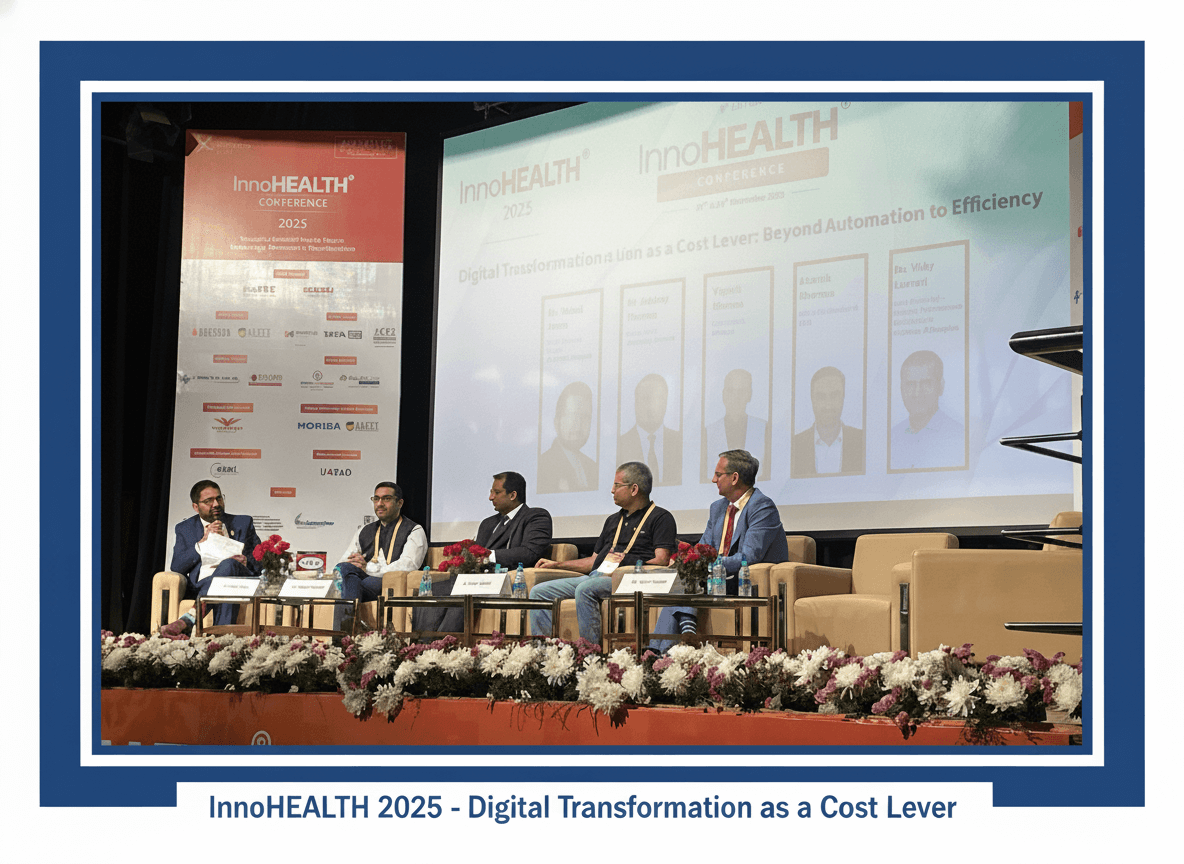
In the rapidly evolving landscape of healthcare, digital transformation is no longer a choice but a necessity for hospitals aiming to optimize resources and enhance operational efficiency. The recent conference session titled “Digital Transformation as a Cost Lever: Beyond Automation to Efficiency” featured an esteemed panel of experts who shared valuable insights on how healthcare institutions can leverage technology to not only automate processes but also drive efficiency and improve patient outcomes. Moderated by Dr. Vishal Arora, Chief of Business Transformation and Operational Excellence at Artemis Hospitals, the session brought together five prominent speakers from various sectors of healthcare.
Keynote Insights by Dr. Vishal Arora
Dr. Vishal Arora opened the session by highlighting the multifaceted challenges faced by healthcare leaders today, including rising operational costs, resource shortages, and the need for effective decision-making in a dynamic environment. He emphasized that while digital transformation is crucial, the focus must shift to deriving tangible returns on investment. The conversation quickly pivoted to how hospitals can utilize digital tools to enhance clinical outcomes, operational efficiencies, and patient experiences.
Mr. Akansh Khurana: Defining ROI in Digital Transformation
Following Dr. Arora’s introduction, Mr. Akansh Khurana, CEO and Co-Founder of THB, shared his perspective on the definition of digital transformation and its impact on cost savings. He argued that the return on investment (ROI) is not uniform across all hospitals and depends on effective execution and change management. Khurana explained that successful adoption of digital tools can significantly enhance patient engagement and streamline operations. He cited the implementation of voice recognition technologies as an example of how automation can simplify processes without requiring extensive change management, thus yielding quicker results.
Dr. Gurpreet Singh: The Supply Chain Perspective
Dr. Gurpreet Singh, Executive Vice President and Zonal Head of Operations at Max Healthcare, took the stage next to discuss the critical role of supply chain management in healthcare cost structures. He pointed out that a significant portion of hospital expenses is tied to procurement, making it imperative to view supply chain management as a strategic lever. Dr. Singh noted that many hospitals are still in the early stages of adopting advanced technologies for supply chain optimization. He stressed the need for hospitals to embrace a holistic view of procurement rather than treating it as a transactional function.
Dr. Vicky Kothari: Optimizing Procurement through Technology
As the Lead of Procalyx, a hospital procurement optimization platform at Affordplan, Dr. Vicky Kothari provided insights into how hospitals can leverage technology to achieve operational efficiencies. He emphasized that the maturity level of procurement processes varies widely among hospitals, with some already employing advanced automation while others lag behind. Dr. Kothari advocated for the integration of data analytics and AI to enhance decision-making and improve procurement outcomes. He highlighted that hospitals could achieve significant cost savings by cleaning and structuring supply chain data for better visibility and actionable insights.
Mr. Yogesh Sharma: The Future of Marketing in Healthcare
As Chairperson of Mamsys, Mr. Yogesh Sharma shifted the conversation towards the evolving landscape of healthcare marketing. He addressed the growing importance of digital channels in patient acquisition and emphasized the shift from traditional marketing methods to digital-first strategies. Sharma pointed out that the emergence of chatbots and AI-driven solutions has transformed the way hospitals engage with patients, allowing for personalized interactions and improved service delivery. He stressed that hospitals must invest in SEO and content marketing to remain competitive in a digital-first world.
Integration and Interoperability: The Foundation of Success
A recurring theme throughout the session was the need for hospitals to address integration and interoperability challenges. The speakers collectively acknowledged that many healthcare institutions still operate on legacy systems, making it difficult to harness the full potential of digital transformation. The panel discussed the importance of creating seamless data channels between standalone systems and cloud-based solutions to ensure that healthcare providers can access and leverage data effectively.
Leadership Alignment and Change Management
Another critical point raised was the necessity for leadership alignment in driving successful digital transformation initiatives. The panel agreed that change management must be a top-down approach, with leaders setting the tone for adopting new technologies and practices across the organization. The speakers underscored the importance of fostering a culture of innovation and continuous improvement within healthcare organizations to ensure long-term success.
Conclusion: The Path Forward
As the session concluded, Dr. Vishal Arora summarized the key takeaways, emphasizing that digital transformation in healthcare is about more than just automation; it is about eliminating waste, reducing leakage, and enhancing patient care through thoughtful planning and execution. The discussion highlighted that while the journey may be challenging, the potential benefits of embracing digital transformation are immense. With a clear strategy, effective leadership, and the right technological tools, hospitals can navigate this complex landscape and emerge as leaders in delivering efficient and high-quality care.

