
Exploring How AI Can Transform India’s Healthcare System
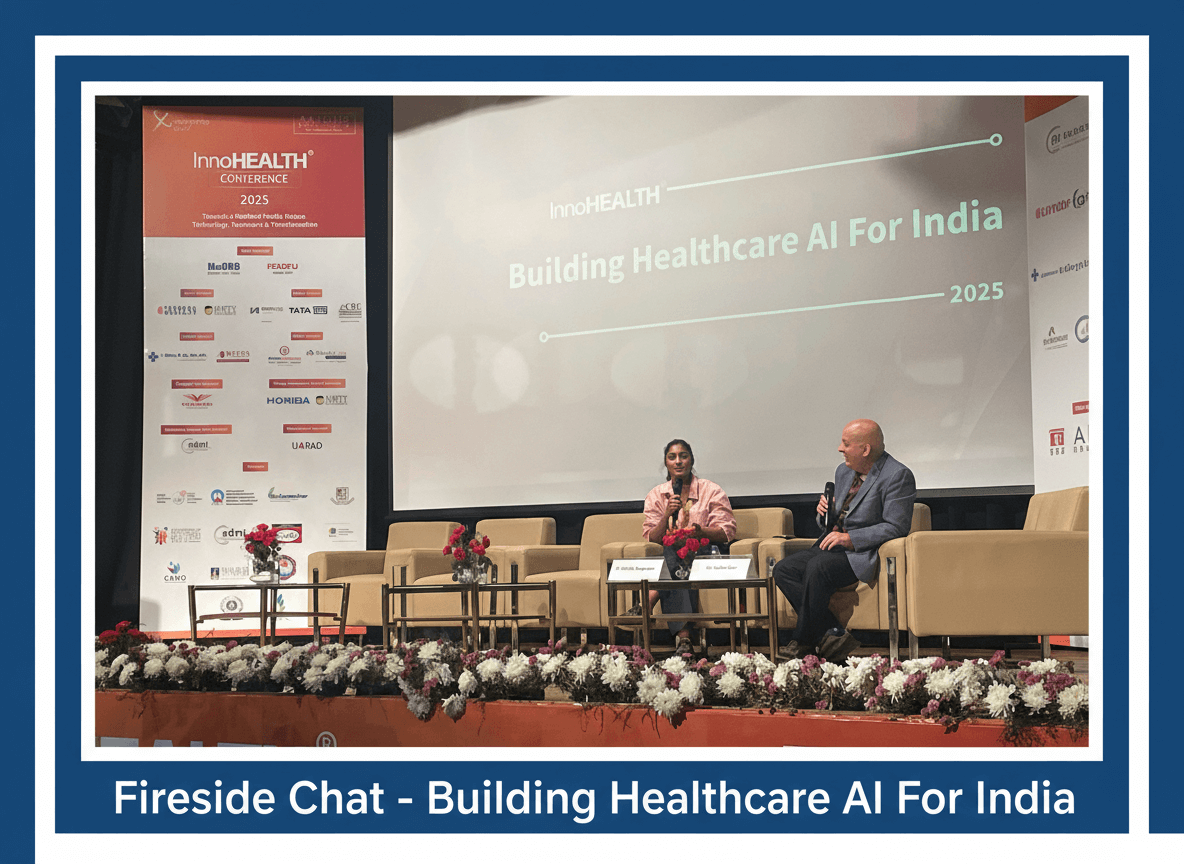
The integration of Artificial Intelligence (AI) into healthcare systems marks a seminal shift in the way medical services are delivered globally. In India, where barriers to access, affordability, and quality of healthcare are prevalent, AI emerges as a beacon of hope. This was the focus of a riveting fireside chat featuring Dr. Krithika Rangarajan, Associate Professor at the Department of Diagnostic & Interventional Oncoradiology and Principal Investigator at the Centre of Excellence for AI in Health, AIIMS Delhi, moderated by Mr. Sachin Gaur, Director of Operations at InnovatioCuris.
Unveiling the Journey into AI
Dr. Rangarajan opened the discussion by sharing her unique journey into the world of AI. “I got into AI when it was not fashionable,” she reminisced. With a background in medicine and a passion for technology, she found her niche in radiology, an area synonymous with technological progress. Dr. Rangarajan emphasized that the convergence of her interests led her to explore AI, allowing her to contribute to a field that directly benefits people.
Her story resonates with aspiring professionals in the audience, showcasing that pursuing one’s passion can lead to groundbreaking innovations. “The other disciplines are not that difficult; if you want it, you can access them,” she urged, motivating the younger generation to embrace interdisciplinary approaches.
The Centre of Excellence for AI in Health
The conversation shifted to the Centre of Excellence for AI in Health, designated by the Ministry of Health and Family Welfare. Dr. Rangarajan explained the center’s mission: to address the challenges of deploying AI solutions in healthcare. “We realized that while we talk about AI in theoretical terms, very little has actually translated into practical applications,” she noted.
The center aims to align AI initiatives with national healthcare programs, ensuring that solutions are not just innovative but also accessible and scalable. “We start from the problem and then move to the solution,” she articulated, emphasizing the importance of addressing real healthcare challenges.
Trust in AI: Navigating Challenges
The discussion then turned to the pressing issue of trust in AI. Both speakers agreed that building trustworthy AI systems is paramount, especially in healthcare where lives are at stake. Dr. Rangarajan shared her concerns about the disparity between AI’s potential and its actual deployment. “How do we ensure that all levels of AI are trustworthy?” she questioned, prompting a critical dialogue on the ethical considerations of AI in healthcare.
Mr. Gaur added that the responsibility lies not only with developers but also with healthcare professionals who must communicate effectively with patients regarding the use of AI technologies. “We need to ensure that patients do not blindly trust AI,” he emphasized, advocating for transparency in AI applications.
Data Quality: The Backbone of AI
Dr. Rangarajan highlighted the significance of high-quality data in creating effective AI models. “Eighty to ninety percent of the problem is about data,” she stated, stressing that without accurate and diverse datasets, AI solutions would falter. She urged healthcare professionals to contribute data, especially from underserved populations, to rectify biases in AI training.
In a powerful analogy, she referenced the challenges faced by AI in recruitment, where models may inadvertently favor certain demographics over others. “This is the kind of invisible bias that can undermine our efforts,” she warned.
Encouraging Innovation Through Collaboration
The conversation also explored the potential for collaborative innovation in India. Dr. Rangarajan announced that the Centre is collaborating with the Gates Foundation to conduct hackathons aimed at fostering innovative solutions in healthcare. “We want to encourage young entrepreneurs and innovators to participate and contribute,” she said, highlighting the center’s commitment to open innovation.
Mr. Gaur echoed this sentiment, emphasizing that successful AI applications must stem from a deep understanding of clinical needs rather than merely relying on data. “Approach your doctor to participate in building solutions,” he advised the audience of budding entrepreneurs.
Advice for Future Innovators
As the dialogue neared its conclusion, Dr. Rangarajan offered words of wisdom for graduates entering the healthcare field. “Technology and medicine are intertwined; use every new tool that comes your way,” she encouraged. She also underscored the importance of pursuing one’s interests genuinely, rather than following trends. “Do what truly interests you, even if it’s not fashionable,” she concluded.
Conclusion: A Vision for the Future
The fireside chat underscored the transformative potential of AI in India’s healthcare landscape. With leaders like Dr. Rangarajan at the helm of research and development, the future looks promising. By fostering collaboration, ensuring data quality, and building trust in AI, India can pave the way for innovations that enhance healthcare access, affordability, and quality.
As the session wrapped up, it was clear that the journey towards integrating AI into healthcare is not just about technology but also about people—healthcare

