
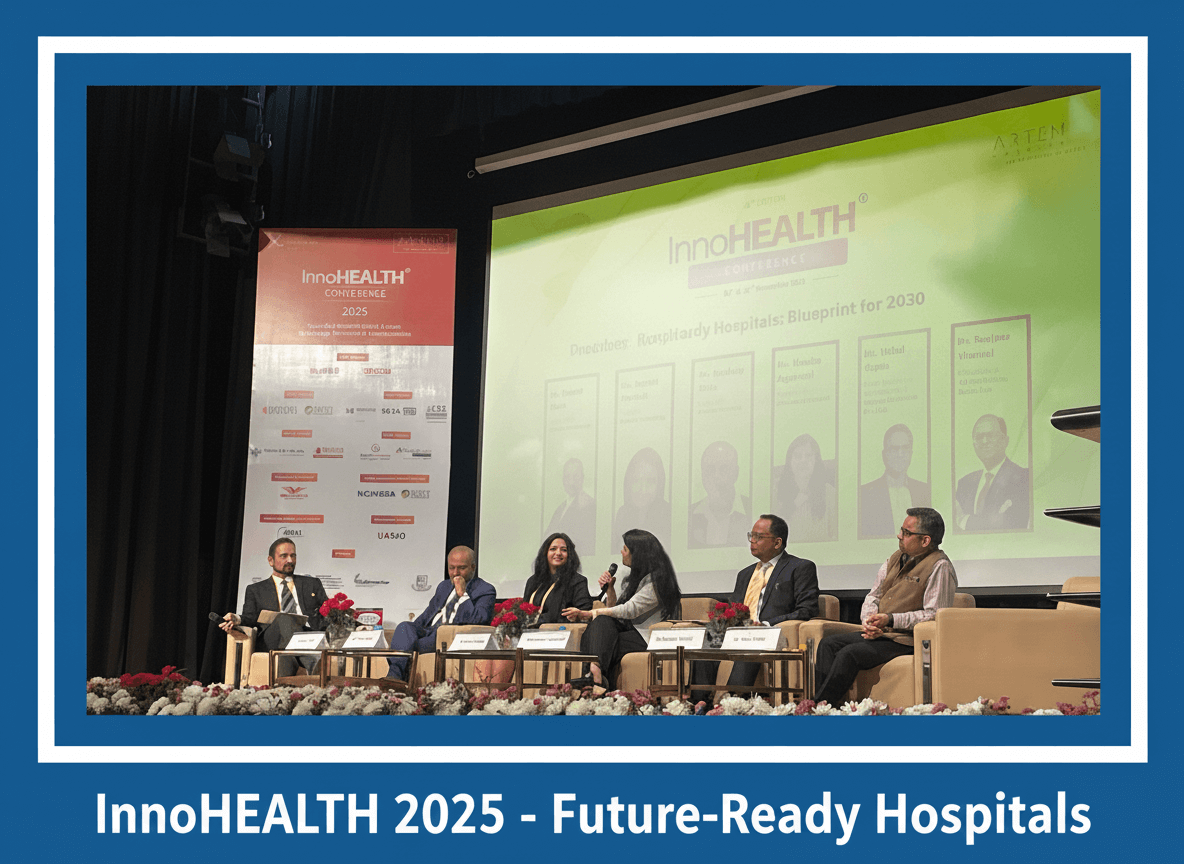
In a groundbreaking session titled “Future-Ready Hospitals: A Blueprint for 2030,” industry leaders gathered to discuss the transformative potential of technology in healthcare. The session was moderated by Dr. Kousar Shah, Group CEO of Sharda HealthCare, and featured key insights from a panel of experts including Ms. Manini Puranik, Ms. Monika Aggarwal, Dr. Raajeev Virmani, Mr. Vishal Gupta, and Mr. Pradeep Saha.
The Role of AI in Healthcare Transformation
The session kicked off with Ms. Manini Puranik, Founder of Ekayaa Consulting, emphasizing the paradigm shift that artificial intelligence (AI) is bringing to healthcare. She illustrated how AI is moving beyond being a mere system of record to becoming an integral part of hospital operations. “AI is changing the way we interact with technology in healthcare, making processes more natural and intuitive for both patients and providers,” she noted.
Ms. Puranik shared a thought-provoking scenario from an AI-enabled clinic, where a virtual assistant could assess patients and provide personalized recommendations. This underscores the potential of AI to enhance patient experiences and reduce wait times—transforming how patients interact with healthcare facilities.
Building Patient-Centric Infrastructure
Next, Ms. Monika Aggarwal, Director of IT at Sarvodaya Hospital, presented her vision for patient-centric hospital design. She highlighted the importance of creating spaces that promote healing and comfort. “Hospitals in 2030 should be lean, safe, and patient-focused,” she asserted, advocating for designs that incorporate natural light, open spaces, and flexible treatment environments.
Aggarwal also touched upon the integration of digital touchpoints, such as mobile applications and real-time monitoring systems, to improve patient engagement and outcomes. By focusing on user experience, healthcare facilities can significantly enhance the patient journey and satisfaction levels.
Overcoming Challenges in AI Integration
Dr. Raajeev Virmani, Clinical Head at GE HealthCare, addressed the potential challenges in implementing AI within healthcare systems. He warned that while AI holds great promise, resistance to change and fragmented data systems could hinder progress. “The key to successful AI integration lies in ensuring data interoperability and addressing ethical concerns,” he emphasized.
Dr. Virmani also highlighted the importance of workforce training, stating that healthcare professionals need to be equipped with the knowledge and skills to utilize AI tools effectively. “If we cannot explain the algorithms and their benefits clearly, we will struggle to gain acceptance,” he remarked.
Creating a Sustainable Healthcare Ecosystem
Mr. Vishal Gupta, Head of Healthcare Business at Ingram Micro India Pvt. Ltd., shared insights on the financial sustainability of hospitals in the age of digital transformation. He highlighted the need for hospitals to focus not only on technological investments but also on operational efficiencies to ensure long-term viability.
“Technologies should enhance the quality of care while optimizing costs,” Gupta stated, emphasizing that the return on investment (ROI) should encompass both financial metrics and patient health outcomes. He stressed the importance of holistic approaches to healthcare that prioritize patient safety and satisfaction.
Cybersecurity in the Age of Digital Health
As digital transformation accelerates, cybersecurity emerged as a critical concern. Dr. Kousar Shah highlighted the increasing vulnerability of healthcare systems to cyberattacks. “Cybersecurity must be integrated into the clinical quality framework of hospitals,” he urged, noting that data breaches can have severe financial and reputational consequences.
Panelists discussed the need for robust cybersecurity measures, including regular training and awareness programs for staff to prevent human error, which is often a leading cause of data breaches. The discussion underscored that safeguarding patient information is not just an IT issue but a responsibility shared by all healthcare professionals.
The Importance of Training and Workforce Adaptation
The session concluded with a discussion on the necessity of workforce adaptation to embrace new technologies. Mr. Pradeep Saha, Group CIO of Artemis Hospitals, emphasized that healthcare professionals must be empowered through comprehensive training programs that demonstrate the value of technology in improving patient care.
“To successfully implement AI and automation, we must create a culture of innovation and acceptance within healthcare organizations,” Saha noted. He also reiterated the importance of designing systems that minimize friction and support

