
Introduction
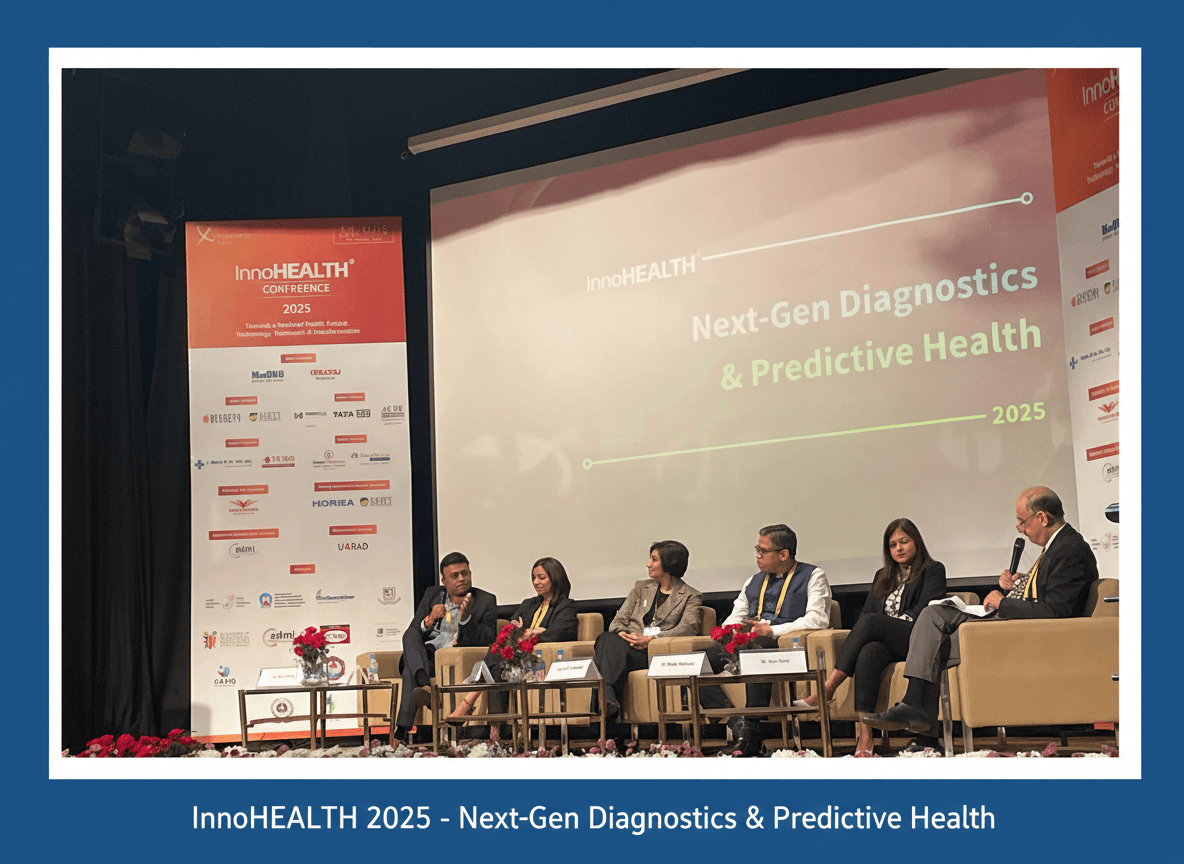
In the rapidly evolving field of healthcare, the intersection of technology and diagnostics is paving the way for unprecedented advancements in predictive health. The recent session on “Next-Gen Diagnostics & Predictive Health” featured an esteemed panel of experts who shared their insights on how artificial intelligence (AI), molecular diagnostics, and clinical integration are revolutionizing patient care. Moderated by Dr. Ravi Gaur, the discussion highlighted the roles of prominent figures in the diagnostics sector, including Dr. Shelly Mahajan, Dr. Ravi Tomar, Mr. Jatin Mahajan, Dr. Namita Jaggi, and Dr. Sonia Lal Gupta.
The Role of Diagnostics in Predictive Health
Dr. Ravi Gaur: Setting the Stage
Dr. Gaur opened the session by emphasizing that diagnostics is no longer just about identifying diseases but anticipating them. He underscored the importance of leveraging big data and AI to enhance diagnostic accuracy and speed, thus improving patient outcomes. “We are entering a time where diagnosis does not wait for disease; we can anticipate it,” he stated, urging all stakeholders to embrace this shift.
Dr. Shelly Mahajan: The Evolution of Pathology
Dr. Mahajan, Lab Director & Clinical Lead at Mahajan Imaging Labs, discussed the evolving role of pathologists in today’s diagnostic landscape. “The pathologist is no longer just a person behind a microscope; they are integral to the diagnostic ecosystem,” she explained. By integrating bioinformatics and genomic insights, pathologists can provide crucial information on disease progression and treatment efficacy, thereby transforming patient care.
Dr. Ravi Tomar: AI and Predictive Analytics
As Managing Director of CRL Diagnostics, Dr. Tomar presented compelling case studies demonstrating AI’s impact in clinical settings. He noted that predictive analytics has already shown a 34% reduction in mortality rates from sepsis through earlier detection. “AI acts as a second brain for clinicians, providing insights that enhance clinical decision-making,” he remarked.
Innovations in Neurology and Infectious Diseases
Dr. Sonia Lal Gupta: AI in Neurology
Dr. Gupta, Senior Consultant in Neurology and Joint Managing Director at Metro Group of Hospitals, provided a unique perspective on the challenges and opportunities in neurology. She explained how AI can predict conditions like dementia, allowing for early intervention and better management options. “Imagine being able to extend a patient’s functional life by five years through early detection and treatment,” she said, highlighting AI’s potential to revolutionize care in her field.
Dr. Namita Jaggi: Infection Control and Predictive Analytics
Dr. Jaggi, Chairperson of Lab Services and Infection Control at Artemis Hospitals, focused on how predictive analytics can reshape infection control protocols. “We need to transition from reactive to proactive measures,” she explained. By utilizing data-driven insights, healthcare providers can anticipate infection outbreaks and enhance patient safety.
Mr. Jatin Mahajan: Empowering Diagnostics through Technology
Mr. Mahajan, President of ADMI and MD of J Mitra & Co. Pvt. Ltd., emphasized the importance of integrating technology into diagnostic tools. He discussed how the latest advancements in imaging design and AI are essential for improving diagnostic accuracy. “The future of diagnostics lies in seamless integration of AI and machine learning into our systems,” he asserted, pointing out that this synergy can lead to better patient outcomes.
Overcoming Barriers to Integration
The Need for Standardization
Throughout the session, the panelists agreed on the critical need for standardization in reporting and digital infrastructure. Dr. Mahajan pointed out, “Without a standardized reporting format, integrating diverse data sources into AI systems becomes a challenge.”
Regulatory and Quality Assurance
Dr. Tomar highlighted the importance of regulatory frameworks to ensure the quality of AI-driven diagnostics. “Trust in AI systems will only grow when we have robust guidelines governing their use in clinical practice,” he asserted.
Education and Training
Dr. Gupta emphasized the role of education in preparing the next generation of healthcare professionals. “Empathy and clinical judgment cannot be replaced by AI; we must educate our students on how to effectively integrate these tools into their practice,” she remarked.
Conclusion: A Call to Action
The session concluded with a powerful message from Dr. Gaur, who reminded the audience that the true essence of healthcare lies in its ability to prevent rather than just treat. “AI and technology must be harnessed to listen to the signals our data provides us. The future of diagnostics is not merely about speed but about creating actionable insights that can save lives,” he concluded.
As the healthcare landscape continues to evolve, the integration of AI, predictive analytics, and next-gen diagnostics is set to transform patient care fundamentally. The insights shared by the distinguished speakers underscore the importance of collaboration and innovation in navigating this exciting future.

