

By Sonali Sundari Shivhare and Anurag Prabhakar Mairal
A Serendipitous Introduction
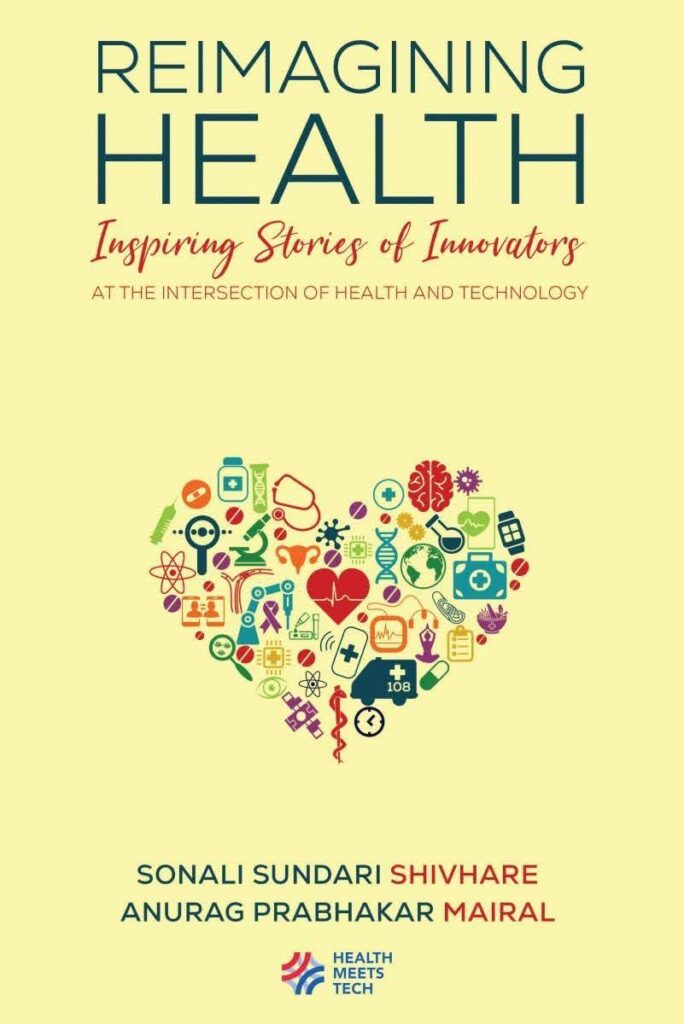
While visiting the Bay Area, I reached out to my classmate Saurabh Gupta, a professor of biomedical engineering, who suggested I meet Professor Anurag Mairal. During my visit to his lab, we were joined by a young medical student who had recently dropped out of his program. Professor Mairal invited me to participate in a coaching conversation he was having with this student about healthcare in general.
Our discussion touched on a fundamental critique of modern medicine—that our current system operates as “sick care” rather than true healthcare. While I had encountered this concept before, our conversation highlighted how difficult it is to overcome the inertia of existing systems and transition toward genuine preventive care.
We also explored a particularly striking insight about healthcare economics in developed nations: as populations live longer, healthcare costs rise exponentially. I positioned this as a “Malthusian Trap” (borrowing from Paul Lillrank’s work), where health systems cannot simultaneously control costs and pursue longer lifespans for their populations. The Finnish healthcare system exemplifies this challenge—only 5% of an individual’s lifetime healthcare expenses occur before age 65, with the bulk concentrated in their final years.
Following our discussion, Professor Mairal graciously presented me with his book, inscribed with the thoughtful note that “we should reimagine healthcare together.”
The Book: A Chronicle of Healthcare Innovation
Reimagining Health: Inspiring Stories of Innovators serves as a compelling chronicle of the struggles, setbacks, and ultimate successes of individuals who create solutions for problems they deeply care about. Each story is both touching and meaningful, offering unique insights into the innovation process.
Mairal’s perspective as an integral part of Stanford’s biodesign ecosystem provides him with a valuable vantage point. Being immersed in an environment of driven individuals and enabling resources gives the author firsthand understanding of how innovation can become an everyday pursuit, while also revealing the inevitable hurdles and challenges that accompany it. Similar to Mairal, the co-author, Sonali also comes from an ecosystem of health systems. Hence, both are present to the whole lifecycle of technology led innovations in healthcare.
The Power of Purpose-Driven Innovation
A central theme emerges throughout the book: most successful innovators experience some trigger or defining moment that sets them on their problem-solving journey. The book clearly articulates to readers that “if you deeply care about a problem, you can overcome the hurdles and make an impact.”
We need more such books to inspire people to take the leap into innovation. As authors notes toward the end, some of the fish who make the jump transform into mighty dragons, (reference to a mythological story) —a beautiful metaphor for the potential that lies within purpose-driven individuals.
Looking Forward: Prevention vs. Treatment
While the authors acknowledge alternative medicine and preventive health as crucial future directions, many of the technological interventions profiled still focus primarily on treating illness rather than preventing it. I hope (authors) they will consider a future edition that profiles individuals who approach healthcare specifically through the lens of disease prevention.
Recommendation
I highly recommend this book for anyone seeking inspiration and courage to solve problems they deeply care about. It demonstrates that meaningful innovation often begins with personal passion and perseverance. A Delightful Coincidence.
As a postscript, I must share a remarkable coincidence: while reading this book in the Delhi Airport lounge (traveling from Norway to Bengaluru), I reached page 35, which mentioned Professor Balram Bhargava. Looking up, I realized Professor Bhargava was sitting directly infront of me in the lounge! It was a pleasure to bring the book and his mention in it to his attention. Sometimes the world feels remarkably small, or perhaps what we read influences what we notice around us.

