
Dr. Adarsh Kumar
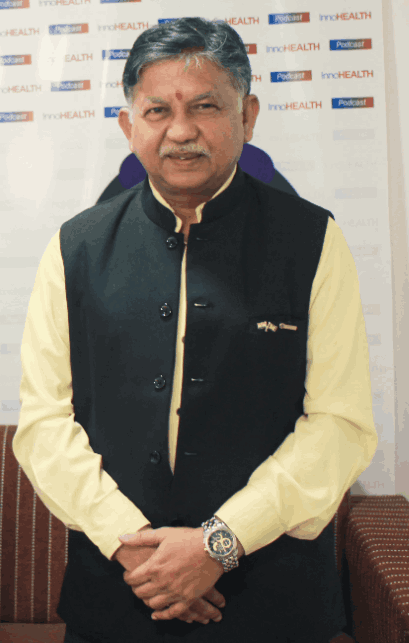
Forensic medicine is an essential discipline in criminal justice, combining medical expertise with investigative techniques to uncover the truth in complex cases. Dr. Adarsh Kumar, a prominent figure in this field, serves as a Professor of Forensic Medicine at AIIMS New Delhi. With a specialized focus on forensic radiology and anthropology, Dr. Kumar’s contributions to high-profile investigations in India have earned him international recognition.
The Role of Forensic Anthropology and Radiology
Dr. Kumar discusses how forensic anthropology and radiology, though emerging fields in India, have become crucial tools in criminal investigations. These branches play an essential role when skeletal remains are the primary evidence, especially in cases where the body is too decomposed to identify. Forensic anthropology helps in determining the identity, age, and cause of death, while forensic radiology allows for advanced documentation of internal findings through techniques such as X-rays, CT scans, and MRIs.
Dr. Kumar highlights how these emerging fields are particularly helpful in situations where only skeletal remains are available. He states, “These are the upcoming branches in India, and we are trying to involve technology for a better criminal investigation system in our country.” This reflects his dedication to developing these fields and applying new technologies to enhance investigative techniques.
Advancements in Digital Autopsy and 3D Scans
Virtual autopsies, or digital autopsies, offer a non-invasive alternative to traditional postmortems. Dr. Kumar highlights how these innovations provide clearer, more thorough documentation of internal findings without compromising legal requirements. Virtual autopsies are particularly helpful in cases where relatives are hesitant about physical autopsies due to cultural or religious concerns. The integration of 3D scanning technologies further enhances forensic investigations, allowing crime scenes to be reconstructed digitally, preserving evidence in its most accurate form.
In discussing these innovations, Dr. Kumar explains, “If we can do that, not compromising with the legal requirement, then this radiology and all these virtual autopsy things help a lot.” This emphasis on balancing legal requirements with technological solutions shows the transformative potential of digital autopsies.
Learning from Global Practices
Dr. Kumar’s experiences in the United Kingdom have also shaped his approach to forensic science. During his two Commonwealth fellowships, he had the unique opportunity to work alongside Scotland Police, observing their meticulous methods for evidence collection and crime scene investigation. These practices, which involve immediate on-site investigation, collection of circumstantial evidence, and collaboration with police from the onset, were a stark contrast to the challenges faced by Indian law enforcement, where the collection of evidence often suffers due to lack of training and resources. Dr. Kumar believes India can greatly benefit from adopting similar practices, particularly in terms of the timely collection and handling of forensic evidence.
Reflecting on his experience with Scotland Police, he noted, “It was a rare experience. How meticulous they used to conduct all those basic investigations, the circumstantial evidence, the collection of evidence, and then their correlation.” Dr. Kumar advocates for such practices to become the norm in India, believing they could significantly enhance the country’s criminal justice system.
Artificial Intelligence in Forensic Investigations
Looking towards the future, Dr. Kumar sees artificial intelligence (AI) as a transformative tool in forensic medicine. AI’s potential to assist in interpreting radiological findings, supporting crime scene analysis, and minimizing personal bias is immense. By feeding vast amounts of data into AI systems, forensic experts can enhance the accuracy and speed of criminal investigations. AI is also becoming an integral part of crime scene investigations, where technologies like 3D modeling can recreate scenes and offer a more objective view of evidence.
Dr. Kumar acknowledges the potential of AI, stating, “I think it’s going to change the whole scenario in coming times… With the help of AI, all those findings can be better interpreted. It will minimize personal bias and give huge benefit to the crime investigation.” This reflects his belief in AI’s capacity to transform forensic practices and improve the efficiency of criminal investigations.
Safeguarding Evidence Integrity
One of the most critical aspects of forensic investigations is preserving the integrity of evidence. Dr. Kumar stresses the importance of maintaining strict control over crime scenes, where the rule “Do not cross the crime scene” is pivotal. He critiques how media intrusion in India can sometimes compromise the quality of evidence and calls for clearer guidelines on media access during investigations. In countries like the UK, such measures are strictly enforced to avoid contamination, ensuring the evidence collected remains credible for legal proceedings.
He remarks, “Crime scene do not cross. That’s the first thing. If someone is entering that crime scene, naturally it is contaminated. So, the quality of investigation will suffer.” This quote emphasizes the need for stricter protocols to prevent the tampering of evidence, which can severely affect the investigation’s outcome.
The Digital Transformation of Forensic Education
Dr. Kumar has also been a key player in transforming forensic education through technology. As part of India’s Digital India Mission, he developed Massive Open Online Courses (MOOCs) that cover key topics in forensic medicine, anthropology, and serology. These courses have made forensic education more accessible to students, police officers, forensic scientists, and judges worldwide, particularly in countries like Kenya, South Africa, and beyond.
By leveraging platforms like YouTube, these educational videos provide a comprehensive learning experience that reaches a global audience, thus fostering a more informed and scientifically grounded approach to forensic investigations. Dr. Kumar highlights the global reach of these efforts, noting, “Previously, they were present on the Swayam Portal when it was restricted to the university students… Now, it is available through YouTube and they are freely available.”
The Importance of Scientific Integrity in High-Profile Cases
In his extensive career, Dr. Kumar has worked on numerous high-profile and politically sensitive cases, including the notorious Sushant Singh Rajput death investigation. Despite the media frenzy and public pressure, Dr. Kumar maintains a firm stance on scientific integrity. He emphasizes that forensic experts must remain neutral and focused solely on the evidence, leaving aside external pressures or public sentiment. For him, every case, regardless of the individual involved, is an opportunity to apply science to uncover the truth.
He stresses, “For us, it’s a case, and for us, our honesty, integrity, and everything that matters.” This underscores his dedication to ensuring that scientific principles guide the investigation, no matter the circumstances.
Challenges and Insights from Real-Life Cases
Dr. Kumar shares that every case, whether high-profile or not, presents unique challenges. Forensic scientists often work with secondary evidence collected by other investigators, and the key to resolving these challenges lies in expert interpretation. The ability to connect the dots and provide a scientific explanation for the evidence gathered is what distinguishes experienced forensic professionals.
Reflecting on his extensive career, Dr. Kumar concludes with a powerful message, “Truth is more thrilling than imagination.” This philosophy drives his work, ensuring that every investigation is approached with a rigorous, scientific mindset.
Dr. Adarsh Kumar’s work in forensic medicine exemplifies how innovation and technology are transforming the field. From virtual autopsies and AI to improve international collaboration and educational outreach, the future of forensic investigations in India looks promising. As technology continues to evolve, Dr. Kumar’s contributions ensure that forensic science will remain at the forefront of criminal investigations, bringing clarity and justice to even the most complex cases.
Authors Biography
Prof. (Dr.) Adarsh Kumar is a Gold Medalist and Professor of Forensic Medicine & Toxicology at AIIMS, New Delhi. He specializes in Forensic Anthropology and Radiology, with extensive experience in medico-legal investigations.

