
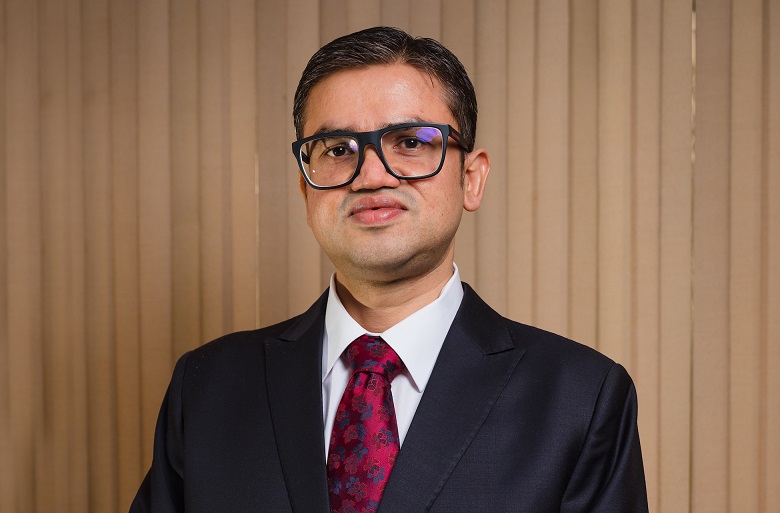
Jatin Mahajan
Jatin Mahajan, Managing Director of J Mitra & Co., India’s leading in-vitro diagnostics company, is a strong advocate of innovation, self-reliance, and growth in the MedTech sector. He was recently interviewed by Dr. Soumya Singh, Creative Editor at InnoHEALTH Magazine, on the future of diagnostics and MedTech in India.
How do you see India’s in-vitro diagnostics (IVD) and MedTech sectors evolving in the next decade, especially with growing focus on self-reliance and indigenous innovation?
India’s IVD and MedTech sectors are entering a defining decade of transformation. ADMI represents over 90 Indian diagnostic manufacturers, many of whom are now MDR-compliant and ISO 13485-certified. The industry is growing at a CAGR of more than 15% and is projected to reach USD 10 billion by 2030. The government’s PLI scheme and 21 Medical Device clusters across the country (as per DoP survey) have already attracted committed investments of ₹5,000 crore, pushing domestic value addition beyond 45%. Coupled with the Ayushman Bharat Digital Mission (ABDM), PM-ABHIM health infra rollout, and expanding R&D support under BIRAC, India is transitioning from assembly to innovation by building patented, export-ready technologies across POCT, CLIA, and ELISA platforms.
What policy interventions or regulatory reforms are most needed today to make India a global hub for affordable diagnostic technologies?
To make India a global hub for affordable diagnostics, ADMI advocates three key interventions.
First, a predictable, single-window regulatory mechanism under CDSCO to fast-track device registration and eliminate redundant testing, supported by upgraded State medical devices testing laboratories (MDTLs).
Second, PLI expansion to cover reagents, plastics, and raw materials, thereby reducing import dependence, which currently exceeds 65% for consumables.
Third, establishing a Centre of Excellence (COE) in medical device parks to foster innovation and drive the growth of health-tech startups by providing resources such as mentoring, funding, and infrastructure, along with the creation of common validation and calibration labs jointly managed by CDSCO, ICMR, and industry partners.
Finally, integrating interoperability with the Ayushman Bharat Digital Mission (ABDM) into every diagnostic device ensures traceability, digital health linkages, and data-driven public procurement. These measures together would strengthen India’s manufacturing credibility and accelerate its rise as a MedTech innovation hub.
With AI, automation, and digital platforms entering the diagnostics space, what are the most promising technological shifts that could redefine healthcare access and efficiency?
ADMI members are at the forefront of AI-driven assay automation, connected POCT platforms, and digitally traceable results that feed directly into ABDM-linked health records. National diagnostic laboratories are adopting automated CLIA systems, data analytics dashboards, and IoT-enabled quality checks, thereby enhancing both accuracy and turnaround time. At J Mitra & Co, we aim to pioneer AI-aided analysers tailored for Tier-II/III markets, reducing result latency by 50%. With PM-ABHIM expanding sub-district laboratories, these technologies ensure that even small towns have access to metropolitan-grade testing. Together, automation, connectivity, and AI will redefine efficiency, minimize human error, and democratise quality healthcare across the country.
How can the diagnostics industry bridge the rural–urban divide in healthcare delivery, particularly in screening and early disease detection?
Bridging India’s diagnostic divide demands smart decentralisation. We must align rural Health & Wellness Centres (HWCs) with the National Essential Diagnostics List (NEDL) protocols to ensure uniform tests are available nationwide. Through public-private collaborations under PM-ABHIM, we can deploy MDR-compliant POCT devices in primary and community health setups. Shared logistics networks and common calibration labs in device parks will further lower operational costs. With ABHA-linked digital reports and tele-referral systems, patients in rural India can now access quality diagnostics comparable to those in metro cities, thereby building true healthcare equity.
You often emphasise decentralisation and democratisation of diagnostics. What does that mean in practical terms for India’s public health system?
Democratising diagnostics means ensuring that quality testing becomes a fundamental right, not a privilege. India’s diagnostic access pyramid must invert, bringing the lab closer to the patient. Through PLI-enabled local manufacturing and digital integration via ABDM, essential IVDs and POCT devices can be deployed in every block-level facility. Collaboration with ICMR and NABL will support proficiency-testing programs that maintain nationwide quality parity. Digitally connected testing hubs reduce reporting times, while cost-effective CLIA systems make high-precision diagnostics accessible to low-income populations. This decentralised model eases tertiary-care pressure, improves disease surveillance, and aligns with India’s Vision 2030 for Universal Health Coverage.
How can the sector maintain affordability without compromising quality and reliability, especially in low-resource settings?
Affordability and quality are not opposing goals and must therefore coexist. We must establish a Quality Forum with CDSCO and ICMR to standardise validation, documentation, and external quality assessment. With PLI incentives, over 40 Indian IVD firms now produce reagents and kits locally, slashing costs by 30–40% compared to imports (DoP report on Boosting the Indian Medical Devices Industry 2023). Mandatory MDR-based quality audits and NEDL-aligned tenders ensure reliable performance at scale. ADMI advocates bulk procurement models, such as NHA’s Jan Aushadhi framework, to extend affordability to government programs. By embedding local innovation within global standards, Indian diagnostics can remain both inexpensive and impeccably trustworthy.
What will it take for Indian diagnostic technologies to achieve stronger global recognition and market share, particularly in emerging economies?
We must constitute an Export Acceleration Taskforce to position India as the “Diagnostics Hub of the Global South.” India currently exports to 60+ countries, registering 20% annual growth, with rising adoption in Africa, ASEAN, and Latin America. Harmonised MDR documentation and common test-validation standards are key enablers. We must support manufacturers in achieving ISO 15189/13485 certifications and in preparing for CE-IVDR equivalency. With robust PLI-driven manufacturing bases and digitally traceable devices, Indian diagnostics can soon rival Korean and European quality benchmarks while maintaining the affordability edge.
How can the MedTech industry ensure ethical and sustainable growth while addressing challenges such as waste, over-testing, and data privacy?
ADMI would like to lead the industry’s transformation by driving it toward green, ethical, and evidence-based diagnostics. We must develop frameworks for eco-friendly disposables and responsible waste management aligned with the MoEFCC Biomedical Waste Rules 2024. We must promote rational testing, guided by ICMR’s NEDL, to avoid unnecessary screening and overdiagnosis. On data ethics, we must endorse the ABDM Health Data Management Policy, which ensures patient consent and the anonymisation of data. Device-park clusters are being encouraged to establish centralised waste-recycling units to minimise environmental impact. ADMI’s approach combines ethics, efficiency, and environmental stewardship as a model for sustainable MedTech expansion.
What role do collaborations between government, academia, and industry play in strengthening India’s diagnostics innovation pipeline?
India’s innovation momentum depends on structured collaboration. The association, along with ICMR, BIRAC, and NIPER, must work to establish common validation facilities and MedTech Innovation Fellowships that train students in MDR documentation and bio-design principles. Through the DoP’s MedTech Innovation Scheme (2025), academic prototypes can be scaled via industry mentoring and pilot production within device parks. We must facilitate joint IP filings between startups and manufacturers to accelerate the commercialisation of indigenous technologies. This collaborative model reduces development timelines by up to 50%, ensuring that India’s ideas translate swiftly into affordable, globally competitive diagnostics.
Looking ahead, what key trends or disruptions do you think will define the future of healthcare diagnostics in India by 2030?
By 2030, I envision a fully integrated, AI-ready diagnostic ecosystem where every citizen’s ABHA ID connects to indigenous analysers and portable devices designed under the “Make in India – Serve the World” banner. Domestic firms will control over 70% of the Indian IVD market and export to 100+ countries, while India will emerge as the largest global supplier of affordable POCT systems. Routine diagnostics will evolve into predictive and continuous screening, empowered by ABDM, AI triage, and public-health digitisation. Regulatory maturity under MDR and innovation parks under PLI will anchor this growth, and in the process, prove that quality, affordability, and scalability can indeed co-exist when industry and government act in unison.

