Prof. (Dr.) Saurabh Gupta
In policy discourse, budgets are often read as fiscal instruments. In reality, they are architectural documents: they reveal a nation’s theory of the future. India’s Union Budget 2026–27 marks such an architectural shift. It signals a transition from viewing artificial intelligence (AI) as an aspirational frontier technology to embedding it as operational infrastructure in healthcare, biomedical research, and engineering education.
In policy discourse, budgets are often read as fiscal instruments. In reality, they are architectural documents: they reveal a nation’s theory of the future. India’s Union Budget 2026–27 marks such an architectural shift. It signals a transition from viewing artificial intelligence (AI) as an aspirational frontier technology to embedding it as operational infrastructure in healthcare, biomedical research, and engineering education.
AI in Healthcare: From Algorithm to Clinical Workflow
The most notable shift is conceptual. AI is no longer framed as experimental or distant; it is acknowledged as a practical layer within hospital systems.
- Centres of Excellence as Application Engines
The allocation of Rs.500 crore for AI Centres of Excellence (CoEs), expected to expand into health and pharmaceuticals, is not significant because of the amount alone. Its importance lies in the policy framing: these CoEs are meant to drive the “application layer” of AI.
For the international academic community, the central question is this: Will these CoEs move beyond model development toward real-world integration?
Globally, the bottleneck in AI healthcare is not model accuracy but workflow integration. Diagnostic AI for oncology, cardiology and radiology has reached maturity in controlled environments. The challenge is embedding it into electronic health records (EHRs), regulatory frameworks, hospital liability structures and reimbursement systems.
If India’s CoEs focus on:
- Translational AI validation in multi-site hospital networks
- Regulatory-grade datasets and algorithm audit trails
- Public-private clinical sandbox environments
then they could become testbeds for scalable, costsensitive AI healthcare models something that the Global South urgently needs.
2. AI for Inclusion: Assistive Technology and Divyangjans
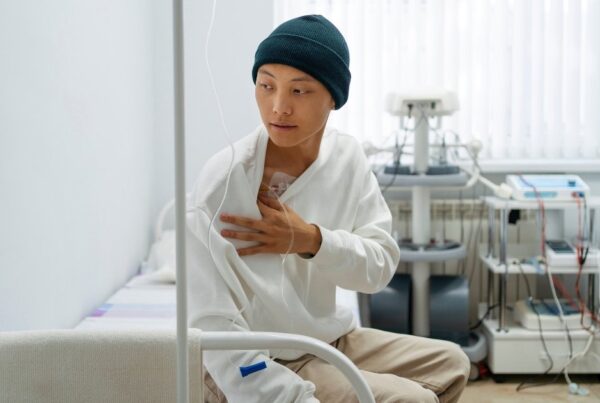
The integration of AI research into the Artificial Limbs Manufacturing Corporation of India (ALIMCO) reflects a powerful social thesis: AI must reduce inequity, not widen it.
Assistive devices enhanced by embedded intelligence adaptive prosthetics, sensor-driven mobility aids, cognitive support systems represent a frontier where biomedical engineering meets machine learning and human-centred design.
The future indicator here is not device count but adaptive personalization:
- Closed-loop prosthetics using reinforcement learning
- AI-powered gait correction through low-cost wearable sensors
- Edge-compute models for rural deployment without cloud dependency
For international institutions, this is a space ripe for collaboration. India’s scale and diversity provide heterogeneous datasets essential for robust biomedical AI systems.
3. Mental Health Infrastructure: AI Beyond Imaging
The expansion of mental health institutions, including new NIMHANS institutes and upgrades in Ranchi and Tezpur, opens another frontier: computational psychiatry. Mental health AI is distinct from radiological AI. It requires:
- Multimodal behavioural data
- Ethical frameworks for predictive analytics
- Cultural sensitivity in model design
If infrastructure investment is accompanied by digital phenotyping, natural language processing for early depression markers and anonymized large-scale datasets, India could contribute meaningfully to global mental health AI research particularly in youth populations.
The critical future metric: Will AI augment therapists and community health workers without displacing human empathy?
4. Diagnostics and Rural Primary Care: AI as Backup Intelligence
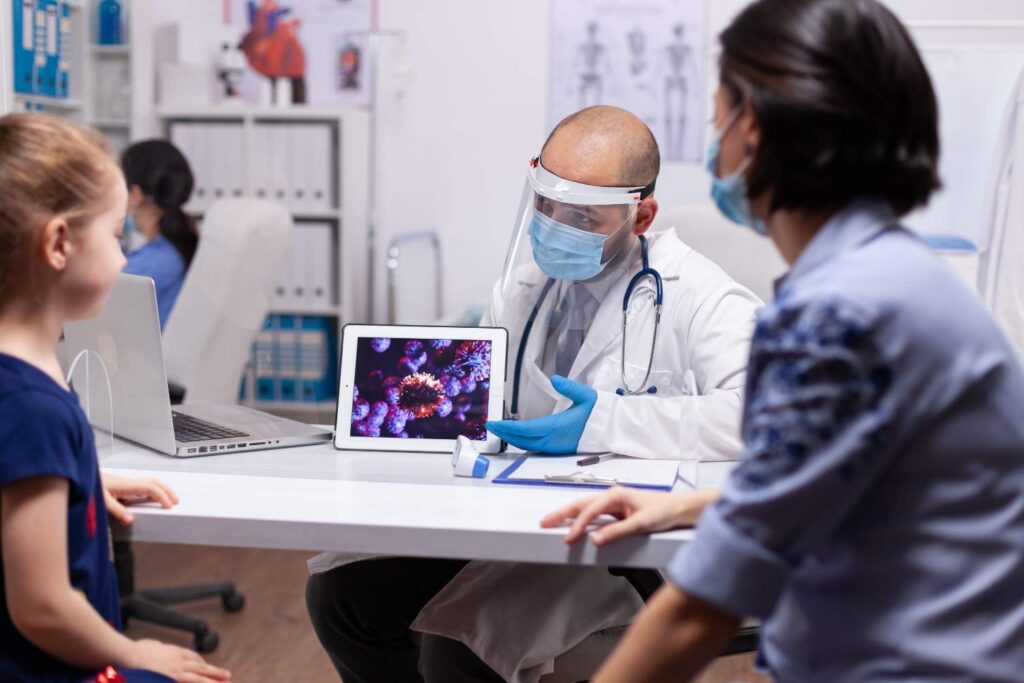
Experts rightly note that AI is mature in diagnostics identifying malignancies, arrhythmias and retinal disorders. India’s rural healthcare ecosystem, often constrained by specialist shortages, is uniquely positioned to deploy AI as a “backup guide.”
The next phase must move toward:
- Offline-capable diagnostic tools
- Explainable AI interfaces for frontline workers
- Federated learning to protect patient data across states
For the global academic audience, India becomes a live laboratory for AI deployment in resourceconstrained settings something high-income countries rarely simulate.
Engineering and Biomedical Research: Linking Academia to Industry
Beyond healthcare delivery, the budget strengthens the foundational layer: engineering research and STEM education.
- IITs and NITs: Incremental Funding, Structural Expectations
Allocations of Rs.12,123 crore to IITs and Rs.6,260 crore to NITs signal continuity with ambition. The introduction of “IIT Creator Labs” suggests a shift toward maker-driven, translational ecosystems.
However, funding increases alone do not guarantee innovation. What matters is:
- Cross-disciplinary AI–biomedical integration labs
- Regulatory-compliant prototyping facilities
- Industry co-funded doctoral research pipelines
The test will be whether engineering research shifts from publication-centric metrics to impact-centric ones.
2. PM Research Fellowship and MERITE Scheme
Maintaining Rs.600 crore for the PM Research Fellowship (PMRF) and increasing the MERITE scheme by 36% signals emphasis on research talent density. For global universities, this is critical. Talent mobility is the bloodstream of innovation. If PMRF scholars are embedded in:
- International joint PhD programs
- AI-biomedical industry residencies
- Open research consortia
India’s research ecosystem could become both contributor and collaborator rather than consumer of global AI innovation.
3. University Townships: Industrial-Academic Urbanism
The proposal for five University Townships near industrial corridors reflects a systems-level understanding: proximity reduces friction.
These townships could become:
- Living labs for biomedical devices
- AI testbeds for hospital networks
- Integrated hubs for med-tech startups
The future signal to monitor is governance structure.

Are these townships autonomous research ecosystems or bureaucratically tethered extensions?
The global lesson from innovation clusters such as Boston, Silicon Valley, and Cambridge (UK) is clear: innovation thrives where regulation is enabling, not obstructive.
Human Capital: AI Requires Skilled Operators
Technology without trained operators becomes ornamental. The training of one lakh Allied Health Professionals across radiology, anaesthesia, OT technology and biomedical fields is therefore strategically aligned.
AI-assisted healthcare depends on:
- Technologists who can interpret model outputs
- Data-literate clinicians
- Biomedical engineers fluent in regulatory standards
Similarly, multiskilled caregivers in a geriatric ecosystem point toward demographic foresight. India’s aging population, though younger than many Western nations, is growing rapidly.
The critical question: Will training include AI literacy and device interfacing, or remain procedurally conventional?
Curriculum modernization will determine whether AI becomes embedded in practice or remains peripheral.
4. Medical Tourism and Regional Hubs: AI as Competitive Advantage
The establishment of five Regional Medical Hubs for diagnostics and rehabilitation intersects with India’s medical tourism strategy.
AI-enhanced diagnostics can:
- Reduce turnaround time
- Improve second-opinion reliability
- Standardize care across geographies
If these hubs integrate:
•Digital twin modelling •Robotic-assisted rehabilitation •AI-driven triage systems

India could differentiate itself not on cost alone but on technologically augmented care.
5. Compute and Infrastructure: The Silent Backbone
Perhaps the most consequential, yet understated, dimension of the budget is its anticipated emphasis on compute and power infrastructure.
AI research particularly small and large language models, multimodal biomedical models and digital twins require:
•High-performance computing clusters
•Reliable energy supply
•Data centre-grade cooling and grid resilience
If India invests meaningfully in domestic compute capacity, it reduces strategic dependence on foreign AI platforms. For biomedical research, this autonomy matters. Sensitive health data demands sovereign infrastructure.
The global academic community should monitor:
•Indigenous AI model development for healthcare
•National health data interoperability standards
•Federated compute networks linking universities and hospitals
Infrastructure is not glamorous, but it determines scientific independence.
6. What the World Should Watch
For top-tier institutions worldwide, India’s 2026–27 budget presents both opportunity and experiment. The following indicators will determine whether this strategic shift succeeds: •Translational Outcomes:Are AI prototypes moving into hospital workflows within three years?
•Data Governance: Are ethical AI frameworks codified at scale?
•Interdisciplinary Convergence: Are engineering, medicine and computer science operating in shared laboratories?
•Talent Retention and Mobility: Do PMRF scholars collaborate internationally while strengthening domestic ecosystems?
•Equity Impact: Does AI measurably improve rural and marginalized healthcare access?
•Compute Sovereignty: Is India training foundational models relevant to its epidemiological and linguistic realities?
7. A Human Technology Paradigm
At its core, this budget articulates a human-centred thesis: AI must serve health, inclusion and education. The risk globally has been techno-solutionism assuming algorithms can substitute systemic reform. India’s strategy, if implemented thoughtfully, may demonstrate a hybrid model:
•AI as augmentation, not replacement
•Engineering research as societal infrastructure
•Biomedical innovation grounded in accessibility
For international scholars and executives, the invitation is clear: engage early, collaborate meaningfully and co-develop frameworks that balance innovation with ethics.